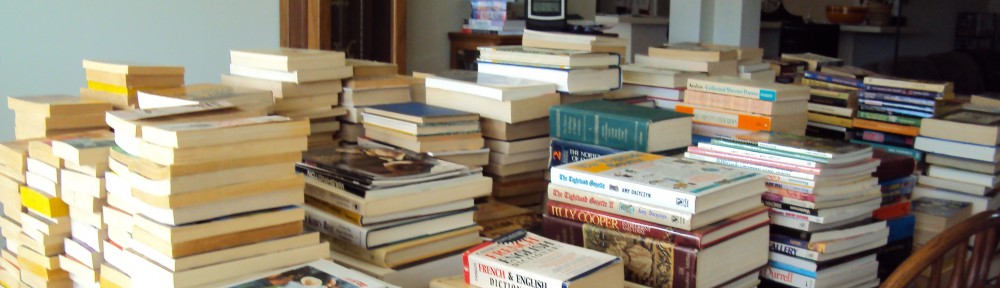
2014 books

CCR book group:

  • The Girls of Atomic City, Denise Kiernan (excellent)
  • Half the Sky, Nicholas Kristof
  • Those Angry Days, Lynne Olson (very interesting)
  • This is the Story of a Happy Marriage, Ann Patchett (articles/essays of varying interest; most good)
  • The Opposite of Loneliness, Marina Keegan
  • The Burgess Boys, Elizabeth Strout (great book, interesting discussion)
  • Flight Behavior, Barbara Kingsolver (fantastic)
  • The All-Girl Filling Station’s Last Reunion, Fannie Flagg (great story, interesting historical background)
  • I gave up on “The Invention of Wings” by Sue Monk Kidd

Books from ‘old’ series:

  • The Gods of Guilt, The Fifth Witness, The Brass Verdict (all Mickey Haller), The Burning Room (Harry Bosch) by Michael Connelly
  • Designated Daughters (Deborah Knott), by Margaret Maron
  • The Charlemagne Pursuit, The King’s Deception (both Cotton Malone), by Steve Berry
  • Hardball (V.I. Warshawski), by Sara Paretsky
  • His Majesty’s Secret Agent (Maggie Hope), by Susan Elia Macneal

New mysteries:

  • The House on Tradd Street, Karen White (1st in a fun ‘ghost’ series set in Charleston)
  • Steeped in Evil (Tea Shop Mysteries), by Laura Childs (also part of a series set in Charleston, enjoyable)
  • The River of Darkness (John Madden), by Rennie Airth (first book in an incredible series of historical mysteries)
  • In the Blood (Jefferson Tayte genealogical mystery series), by Steve Robinson (good fun, interesting genealogy tips)
  • Hiding the Past (Morton Farrier genealogical mystery series), Nathan Dylan Goodwin (ok)
  • A Deceptive Clarity, A Glancing Light, Old Scores (three Chris Nordgren art historian mysteries), by Aaron Elkins (very enjoyable and interesting)
  • Loot, Turncoat (two standalone books), by Aaron Elkins (good stories)
  • Anonymous Sources, debut novel by Mary Louise Kelly (excellent)
  • Bluffing Mr. Churchill, by John Lawton (I remember this being good, but can’t remember anything about it.)
  • Still Life (Inspector Gamache #1), by Louise Penny (I’ve had this on my Kindle since 2009, and finally read it.  Seems like a good series, and I have a couple more.)

Diplomats and Spies:

  • An American Spy (3rd Milo Weaver book), by Olen Steinhauer.  (best book in this spy trilogy)
  • The Cairo Affair, by Olen Steinhauer (CIA officer with State cover at Embassy Cairo)
  • The American Mission, by Matthew Palmer.  Palmer is a Foreign Service Officer, and I enjoyed all the little FSO insider details in the book.  Good fast-paced thriller.

Miscellaneous fiction:

  • Inferno (Robert Langdon), by Dan Brown
  • An Officer and a Spy, Robert Harris (surprisingly dull novel about the Dreyfus Affair)
  • Sycamore Row, John Grisham
  • Damage, Felix Francis
  • Oath of Office, Michael Palmer.  This is Matthew Palmer’s father; he’s an established author of medical thrillers.  Pretty good.
  • The Tears of Autumn, Charles McCarry.  Weird but fascinating 1970s conspiracy thriller about the Kennedy assassination.  I got it at Powell’s bookstore.

Kids’ Classics:  “A Wrinkle in Time”, by Madeleine L’Engel, and “The Westing Game”, by Ellen Raskin.  These are often mentioned by people as ‘my favorite book growing up’ so I decided to read them.

Non-fiction:

  • Bossypants, Tina Fey.  I usually avoid memoirs like the plague, but I like Tina Fey and enjoyed her book.
  • Scent of the Missing, Susannah Charleson.  Lovely book about training a search and rescue dog, enjoyed it a lot.
  • Call the Midwife, Jennifer Worth.  I love the TV series, and the book is very good too.

I’m sure I missed some.  I also fill in nooks and crannies of reading time with old favorite mysteries and looking up stuff in history books.


Now, where was I?

2014 and 2015 sure went by fast!  I ended 2013 with a firm resolution to keep up with writing about reading, and look what happened.  Or didn’t happen: no posts in two years.  This year, when the annual renewal for the website came around again, the choice was to shut everything down, or get serious about writing.  So I’ll get started and see how long I can go this time.

I’ve been doing almost all my reading on my Kindle.  Between eBooks from the Charleston County Public Library (CCPL), Kindle Daily Deals, Kindle Unlimited and an occasional eBook purchase, I can read a lot without spending a lot.  CCPL’s selection is wildly uneven, but I have been able to borrow an amazing variety of books that I’ve really wanted to read.  Then I’ll hit a dead spot where none of the books I want are available, then I’ll hit another hot streak.  Read a review of a new book, find it at CCPL, borrow it, read it, all without leaving home or spending a dime.  Love Charleston County’s great eBook library, also our fantastic county parks.

The useful thing about Kindle, for my current purposes, is that Amazon keeps a list of all the books I’ve bought or borrowed so I’ve been able to put together a pretty comprehensive roundup of what I’ve read in the last two years.  They don’t keep a list of the books I’ve gotten with my Kindle Unlimited subscription though, which is a shame.  I haven’t read many new books at all in dead tree format, and most of them were memorable non-fiction books that made it into the roundup too.

I did another huge book cull last year, and donated many boxes of books to the Friends of the Charleston County Public Library.  I never go to their giant book sales though; I don’t want to be tempted to buy any of my old books back.

Still have dozens of books on my Kindle that I’ve bought over the years and haven’t yet gotten around to reading.  And even after two major book culls since we moved here, I still have plenty of books on the shelves.  Always nice to have an old Maron or Paretsky or Christie or Gilman at hand when I just want to spend a little time with old friends.

2013 Wrap-up

I’m racing the clock to get the rest of my opinions and reflections about 2013 books and reading posted before 2013 ends, so bullet points are the way to go:

  •   I forgot to include Sisters on the Case, edited by Sara Paretsky, in the bit about Mr. K’s bookstore.  I was happy to find a clean paperback copy of this mystery  anthology on my trip to the bookstore, and started reading it as soon as I got home.  I might have read this a long time ago, but I enjoyed it anyway.
  • My current hiatus book is Harry Truman’s Excellent Adventure: The True Story of a Great American Road Trip, by Matthew Algeo.  Harry and Bess Truman were so strapped for cash after he left the presidency, this trip by car from Independence MO to New York and back was motivated as much by frugality as adventure.  The book started with a lot of information about Harry Truman’s background and political history that I already know, and it feels like a long slog to get to the story of the Trumans’ trip across America, meeting Americans without the protection or inhibiting effect of the Secret Service.  Truman is a favorite subject of mine, so I hope I can get back into this Kindle book and get swept into the journey with Harry and Bess.
  • I have had one book on hiatus so long, I’m giving up.  I borrowed The Worst Hard Time, by Timothy Egan, from Amazon’s Prime Kindle lending library more than a year ago, and it needs to go back.  Timothy Egan is a wonderful writer and one of my favorite NYT columnists, as well as a fellow product of the Great Pacific Northwest, and this book about the suffering endured by people during the Dust Bowl is justly famous, but I just can’t get into it.
  • I can’t decide whether to give up on Sweet Tooth, by Ian McEwan, and pass it along or not.  I bought this used hardback because I thought it was one of the books the book group was going to read, worked halfway through it, then found out the book wasn’t on the list.  I wasn’t enjoying it, didn’t care about any of the characters in this lukewarm John Le Carre pastiche, and I haven’t tried to continue reading it since.
  • When I was writing about the new mysteries series books I’ve found, and reminiscing about old favorite series, I found out that there are V.I. Warshawski books I haven’t read.  Vic is Sara Paretsky’s hardboiled Chicago private eye, first and likely greatest of the tough women detective heroines.  I have the first seven books in the series, and the collection of short stories, but there are nine more in the series.  I discovered I’ve read but do not own four of them, and recall I found them overly preachy about social issues (that concern me too!) to the detriment of the quality of the books. Subsequent books in the series fell off my radar screen, but there are four recent ones that sound pretty good.  I’d like to see if Vic has gotten her sleuthing mojo back.
  • While I was trying to work out how many books Sara Paretsky has written, and in what order, I found a fantastic website called OrderOfBooks.  It’s exactly what the name says: you put in the name of a series or the name of an author, and you get a list of the books in order of publication.  Love it, also looked up the Elvis Cole series, there is a total of 15 books.
  • How could I forget Sneaky Pie Brown when I was listing favorite mystery series!  Grey tiger cat Sneaky Pie Brown helped Rita Mae Brown write her series about Mary Minor ‘Harry’ Haristeen and her sleuthing pets, grey tiger cat Mrs. Murphy and corgi Tee Tucker.  I have a lot of the books in this series, but kind of went off it when the books started getting really far-fetched and seemed more of an opportunity for Rita Mae Brown to vent her libertarian politics than fun mystery stories.  Once you’ve accepted the premise of a sleuthing cat and dog, and the first books were good enough that I did, it would seem difficult to get too far-fetched down the line, but Rita Mae Brown’s editor let her get away with it.
  • I loved The Lincoln Lawyer, by Michael Connelly, both the book and the movie, and it looks like Mickey Haller, the Lincoln lawyer, has a series.  I look forward to reading more of his exploits.
  • I won $100 in a sports bar Bingo game (yes, there is such a thing) and used part of it to buy lovely new Penguin trade paperback editions of W. Somerset Maugham’s Collected Short Stories, volumes 1, 2 and 4.  I have read my old copies to tatters, and was afraid they would fall apart in my hands if I tried to read them again.  My Volume 3 is still in good shape, those are the stories about Ashenden the spy, and I don’t like them that much.  W. Somerset Maugham wrote fabulous short stories, and I still love reading my favorites again and again.  I was delighted that Mary Anne and Will Schwalbe of The End of Your Life Book Club loved the stories too.
  • Finally, my lesson learned about book blogging is that if I don’t write about a book I’ve read on Kindle in a timely fashion, I can’t look at the back cover book description or flip through the pages to remind myself of characters’ names or plot points in the story.  I can look on Amazon to glean some of this information, but then I risk picking up and repeating other readers’ opinions about the book.  Also, it’s hard to get caught up on writing about dozens of books I’ve read over a period of months in the last week of the year.  So glad I did it though, it’s been fun remembering all the great, good and fun stuff I’ve read in 2013.  My New Year’s resolution is:

Keep the blog writing on pace with the book reading!!

and lose 10 pounds.

I bought some books

I love finding discounted, really cheap, or no-cost books, but sometimes I do splurge on regular-priced books.  These are nearly always books from Amazon, so even their ‘regular’ prices are pretty reasonable.  I have bought most of the CCR book group books we’ve read as regular-priced Kindle books.  The group tends to choose recent books that are not yet available in paperback, and the Kindle editions are cheaper and less bulky than hardbacks.  I did luck out on Madonnas of Leningrad, which was $2.99 on Kindle, and I bought Mornings on Horseback in a very nice trade paperback edition; it was published some years ago, and I prefer to read nonfiction in print editions, especially if the book has photographs (or maps).  I also bought some of the Maisie Dobbs books at regular price, and several other new-to-me-author books at regular price, but I’ve already written about them.  Here are three I bought and read recently:

Band of Brothers, by Stephen Ambrose:  The book is about the men of Easy Company, 101st Airborne Division, who parachuted into Normandy on D-Day and fought their way through France, the Low Countries and Germany all the way to Hitler’s Eagle’s Nest.  I’d been wanting to read this since I saw the mini-series, even more so after I read The Wild Blue and realized what a good writer Stephen Ambrose was.  It’s a nice trade paperback, and it was definitely the right decision to get it in a print edition.  There are so many people in the book, and they keep moving between companies and platoons and battalions so much I had to keep flipping back to keep track of who was who.  Not to mention I had to keep going back to read the definitions of companies, platoons and battalions.

I loved and appreciated the honesty of the Easy Company men Ambrose interviewed for the book, and he did a phenomenal job of working their stories into a fast-paced, coherent narrative.  The consequences of the higher-ups’ good planning or arrogant folly or dumb luck are starkly clear in Ambrose’s swift scene-setting details of the D-Day landing, the shambles of Market Garden, and the intelligence failures leading to the Ardennes trap in the Battle of the Bulge.  Ambrose also explained how thoroughly the paratroopers were trained; in the movies, it always looks like the group of geographically and ethnically diverse soldiers are plucked from the cities, towns and farms of America, and are in combat the week after basic training.  I was impressed at the planning, selectivity and time the U.S. Army put into the paratroopers’ training, similar to the care that went into training the bomber pilots in The Wild Blue.   It’s unusual for me to think of ‘training’ as heroic and life-saving, but Ambrose makes it crystal clear that even the bravest men benefited greatly from their thorough preparation for the terrible things they had to face in combat.

I remembered some of the men and incidents in the book from the HBO mini-series, and it was good to be able to slowly read and understand many of the dramatic but confusing things in the series. The Afterword in the book was a heartfelt, inspiring and sometimes tragic synopsis of what happened to the men who survived their service in Easy Company.

The End of Your Life Book Club, by Will Schwalbe:  I was attracted to the title of this book, but quailed a little when I read that it’s a memoir Will Schwalbe wrote about books he and his mother Mary Anne read and discussed during the long months of her treatments for pancreatic cancer.  The title makes it clear that the treatments did not save Mary Anne, but the idea of facing death by reading was intriguing; I thought it would either be inspirational or unbearably grim, and it was worth the risk to read and find out.

The overall effect was: inspiring.  Will and Mary Anne and the Schwalbe siblings, spouses and grandchildren are excellent company, without being gooey or pompous, things I find irritating in most memoirs.  I usually feel cynicism coming on when I get an inkling that a book is about ‘celebrating life’ and ‘giving back’ and so on, but the Schwalbes come across as genuinely accomplished, interesting, worthwhile people.  The descriptions of Mary Anne’s extensive high-level work with refugee and development NGOs are matter of fact and highlight the importance of the work and her joy that she can be part of it.  I often think that the lack of self-awareness is a debilitating and annoying personality trait, and Mary Anne is gloriously self-aware about the blessings and good fortune of her cultured, prosperous life, and it serves to make her kind and generous.  Of course, the book’s author has a lot to do with the positive way that Mary Anne and her family are portrayed, but Will seems like an honest broker as well as a loving son, self-aware in his own right.

But all the above is basically background:  the books are the heart of the story and satisfyingly central to it.  Will and Mary Anne think and talk about books the way I do, and I enjoyed the sense of eavesdropping on their conversations.  There is also a list of all the books discussed or mentioned in the book at the end; useful, since I’m interested in reading some of them (yet more books for the list).  Finally, I was surprised that the description of the cancer treatment was so honest and interesting. The doctor tells Mary Anne her cancer can be “treated, not cured”, and the details of the medicines, side effects and complications are so deftly handled, the impression is of a quest, not simply an ordeal.  I found this book moving and very satisfying, I learned a lot and felt a lot.

The Big Book of Christmas Mysteries, edited by Otto Penzler:  The Kindle edition was $10.99, an excellent price for 59 stories with a print length of 674 pages.  I’m still working my through this one.  It’s always comforting to have a good mystery anthology at hand, and this is a very good one.  I wasn’t aware of Otto Penzler before, but it seems he is a well-know editor of mystery anthologies, so I’ll want to get to know him better.  I like the way this book is organized; there is an easy to use table of contents divided into different categories of stories (traditional, funny, hard-boiled and so on) and I can link to any story I want and jump around in the book the way I like to.  But I still can’t tell how long a story is:  I’ll want a quick story to finish before I go to sleep, but the one I’m reading goes on and on and on, with no way of knowing how much more of it there is.  At least I don’t have to find someplace to put a 674 page book.

CCR Book Group October, November, December

Since my first CCR Book Group post, the group has read and discussed a superb book, an extremely good book, and a good book.

October:  The superb book was The Round House, by Louise Erdrich.  I probably wouldn’t have read this novel if the book group hadn’t chosen it.  The book is about the isolation of Native Americans on a reservation: from opportunity, respect, and justice for crimes committed against them with impunity.  When Joe Coutts is 13, his mother is raped and beaten, and a young woman is murdered, in the Round House, an abandoned building that had once been used by the reservation’s residents for Native American spiritual ceremonies.  As Joe and his father Basil desperately try to bring Geraldine Coutts back from her deep anguish and shame after the attack, Joe watches as law enforcement focuses on determining which police agency has jurisdiction over the case, instead of investigating the crimes with the vigor necessary to find the rapist/killer.  Joe and his three friends, showing more initiative and dedication to justice than the police, find clues to both the crime that devastated Joe’s family, and the greed and corruption behind the crime.  The members of Joe’s close-knit extended family and Joe’s relationship with his closest friend Cappy come to luminous life as Joe remembers the tragedy and its aftermath many years later.  This is a great and important book: the themes of historic injustice and betrayal of America’s native peoples are more clearly expressed in this universal story of friendship and family loyalty than anything I have ever read.  I was eager and excited to discuss the book with other readers, and the group’s discussion exceeded my expectations, making the experience of reading the book even better.

November:  The extremely good book was And the Mountains Echoed, by Khaled Hosseini.  Like Louise Erdrich, Hosseini is a celebrated and successful novelist whose books I had never read.  I loved the way the book’s multiple points of view and narrative styles humanized its Afghan characters against the sad history of their country, instead of making them one-dimensional victims.  Themes of secrecy, betrayal and regret could have happened anywhere at anytime (universality), but the settings in Afghanistan, Paris and the United States grounded the themes and made them come to life through the characters and their stories.  The theme of deracination, being torn from, driven from or running from your home and culture tied all the stories together.  The courageous, competent devotion of the European doctor and nurse who voluntarily came to Afghanistan makes an effective counterpoint to the triumphs and tragedies as the stories of those who left and stayed in Afghan villages and towns diverge then come together as the novel ends.  This novel inspired one of the most spirited and enlightening discussions ever in the book group.  (Note to self: It’s not good to wait too long to write about books, I can’t remember any of the characters’ names.)

December:  The good book was Good Prose: The Art of Nonfiction, by Tracy Kidder and Richard Todd.  The first sections of the book were stale and didactic pointers on style and grammar.  Since I have no ambition to write articles or books, this advice didn’t resonate with me.  The book came to life when Tracy Kidder, a celebrated and successful nonfiction writer whose books I had never read, and his long-time editor Richard Todd started writing about their long and fruitful collaboration.  The details about choosing, abandoning and Eureka! finding topics for Kidder’s books were especially compelling.  And my vague intuitions about the importance of editing made Kidder’s specific description of how a good editor makes all the difference to an author a welcome and useful revelation.  So that’s how great books happen!  The highlight of the group discussion came when a former journalist talked about her own experiences in choosing topics for magazine and newspaper features.  Maybe this book will ultimately be the inspiration to read Tracy Kidder’s famous books about a teacher and her students, and the dawn of the computer age.

Looking forward, the next books to read are:

  • January:  The Girls of Atomic City.  I feared this one would be a long, dry book, but I’ve started it and the language is lively and engaging.
  • February:  Those Angry Days.  I am so interested in the topic of the fight between the isolationists and the FDR administration, I volunteered to lead the discussion on this book.
  • March:  Half the Sky.  Co-author (with his wife) Nicholas Kristof is a fellow Oregonian, and an expert on women’s issues in the developing world.  His columns about these and other topics in the NYT are passionate and authoritative.
  • April: The Burgess Boys.  I am excited about reading another novel after a string of four nonfiction books.  The description of this book looks exciting.

Series Roundup

I have had favorite mystery series for a long time: Deborah Knott (Margaret Maron), Mrs. Pollifax (Dorothy Gilman), V.I. Warshawski (Sara Paretsky), Tess Monaghan (Laura Lippman), Jane Whitefield (Thomas Perry) and of course Agatha Christie’s Hercule Poirot and Miss Marple and Dorothy L. Sayers’ Lord Peter Wimsey.  This year I had the good luck to discover five new book series:  Historical mysteries Maisie Dobbs (Jacqueline Winspear), Maggie Hope (Susan Elia MacNeal) and Phryne Fisher (Kerry Greenwood); historical thriller Cotton Malone (Steve Berry) and hardboiled detective thriller Elvis Cole (Robert Crais).  I’ve written about Maisie Dobbs and Maggie Hope in other posts; in this one I want to summarize the Cotton Malone and Elvis Cole books I’ve read so far, as well as the second Phryne Fisher book.

Steve Berry’s Cotton Malone historical thrillers are chock-full of detailed historical information and lots of heroic derring-do and villains plotting deviously.  The struggles between the heroes and villains take place in contemporary times, with the underlying history of each struggle revealed as the plot hurtles forward.  Eight Cotton Malone novels have been published to date, with the ninth due in May 2014.  I have finished the first three so far.

  1. The Templar Legacy:  This is Berry’s fourth book and first in the Cotton Malone series.  It was written not long after the huge success of Dan Brown’s The Da Vinci Code, and both books share ‘the lost secrets of ancient power’ theme.  But hey, Da Vinci Code spawned a lot of imitators, and Steve Berry has got to be one of the better ones, with his own distinctive voice and competence as a writer.  Briefly:  After his abrupt retirement from a stressful career as a covert operative for the U.S. Justice Department, Cotton Malone runs a bookstore in Copenhagen.  He finds out that his old boss is in Denmark on personal business, and quickly comes to her aid as the personal business turns mysterious and deadly.  Their search for the villainous perpetrators and the race to the secret of the Templars’ treasure converge near an ancient monastery in France.  The pace isn’t as peppy as Dan Brown’s, but the history is more detailed and fully developed. (library eBook)
  2. The Alexandria Link: Cotton Malone’s peaceful existence as a Copenhagen bookstore owner is again shattered when he learns that his teenage son Gary is being held hostage to force Cotton to reveal the secret that will lead to the lost Library of Alexandria.  Cotton’s bitter ex-wife Pam helps him rescue Gary from the kidnappers,  and joins him and some other good guys in following clues across Europe and to the lost Library’s hiding place in the Sinai.  I liked this one; the subject of the Alexandria library felt fresh, and Cotton and his friends and family are good company on an exciting chase. (library e-Book)
  3. The Venetian Betrayal:  This one was goofy.  The story of Alexander the Great and his tragic love for his friend whatshisname is boring, and the mystery of Alexander’s lost grave is a stale subject.  Cotton Malone and friends race the whack-job female dictator of a newly independent Central Asian country and her minions to the lost grave, where a secret elixir of great power is buried with Alexander and his chum.  The plot is convoluted and dull at the same time, but I still liked Cotton Malone’s determination and the loyalty and cooperation he shares with his friends.  I got this one from the lunch bunch book swap, and the library seems to have all the other books on eBook, so Cotton Malone is a no-cost guilty pleasure.

The first book I read by Robert Crais, The Two-Minute Rule, was from the lunch bunch book swap, and was a good book and still, so far, my favorite.  I paid $1.99 for another one, Chasing Darkness, when it popped up as a Kindle Daily Deal.  This book introduced me to Robert Crais’ series detective Elvis Cole, who was worth tracking down in the public library’s eBook holdings.  There are a LOT of Elvis Cole books; I have read three so far, I think in reverse order of publication date:

  • Chasing DarknessAs a forest fire sweeps down a Los Angeles canyon to a cluster of houses, a policeman evacuating residents from the area discovers a very dead body in one of the houses.  Evidence found with the body of Lionel Byrd points to the dead man as a serial killer of young women.  When Elvis Cole hears about the death, he realizes that, as investigator for Byrd’s defense lawyer in a trial two years ago, he found the evidence that set Byrd free, allowing him to kill more women.  Cole’s integrity and sense of guilt drive him to discover what really happened and the depth of his own culpability.  I think this is one of the later books in the series, and the kind of book I enjoyed reading at the time, but now remember very little about.  In such situations, a glance at the blurbs on a real book and a quick flip through the pages help to jog the memory; with Kindle books, I have to check on Amazon.
  • The Last Detective:  This one was very good.  Elvis is taking care of his girlfriend’s 10 year old son, when the boy is snatched while playing in the canyon behind Elvis’s house.  When the kidnapper calls, he accuses Elvis of committing atrocities as a soldier in Vietnam, and demands a large ransom in reparation and to return the boy.  Elvis and his stoic friend Joe Pike search for clues to discover the real reason for the kidnapping and find the boy, as the child’s millionaire father arrives in Los Angeles to hysterically meddle in the efforts to rescue his son.  Elvis’s anguish as the child remains in terrible danger and his cherished relationship with his girlfriend unravels is very realistic, and the impact is memorable – although I can’t remember the names of the child, the girlfriend, or her ex-husband.  (library eBook)
  • Stalking the Angel:  Didn’t like this one, all the characters Elvis deals with in his case are nasty.  As I remember, there is a stolen antique samurai manual of great value, a nasty businessman, his weird daughter and idiot wife, the Japanese underworld, a cult, and too much gruesomeness.  Since this book came early in the series, however, there is quite a bit of information about the tough beat-up former stray cat that is a fixture of Elvis’s household, as well as more backstory for tough guy Joe Pike.  The book has still soured me a little on the series.  I think I will try another one of the well-reviewed stand alone books next.

I read Flying Too High, the second book in the Phryne Fisher series set in 1920s Melbourne, Australia.   In this book, a young man who owns a flying school is suspected of the bludgeoning death of his unpleasant father, and the young man’s mother and sister ask Phryne to help clear his name.  In the book’s other investigation, Phryne and her cohorts Dot, Cecil and Bert search for the kidnapped daughter of a lottery winner.  The little girl is feisty and precocious, her distraught family is sweet, and the kidnappers are both bumbling and menacing.  Book Phryne is still not as adorable as TV Phryne on Miss Fisher’s Murder Mysteries, but the books are fun, and make me appreciate the TV series even more.

I am not-so-patiently waiting for Margaret Maron’s next Deborah Knott book to come out in August 2014, and in the meantime I’m happy I found some good series books to read.  I read through all of my other favorite series books long ago – or so I thought.  I went on Amazon to check the correct spelling of Sara Paretsky’s first name, and discovered that Paretsky has been writing more V.I. Warshawski novels!  Vic was one of the first and greatest tough female detectives, and I’m excited to discover she’s still around.

Maisie Dobbs series, by Jacqueline Winspear

I think my greatest reading joy this year was discovering Maisie Dobbs, the ‘psychologist and investigator’ who survived service as a nurse on the Great War battlefields of France, only to be reminded of the horrors of the war as she undertakes cases involving other war veterans still suffering in its long aftermath.  I have read books 1-8 in the series, and I need to keep track of the storyline of each one.  The first book, Maisie Dobbs, made such a vivid impression on me that I still remember its details months after reading it.  I knew I had loved the other books in the series, but couldn’t match the stories and characters I remembered to their specific titles.  I had to turn to Amazon to jog my memory for each book, but once jogged, I managed to sort my impressions into useful, though compressed, order.

Throughout the series, the memories of the Great War smoothly and continuously inform the structure of the books.  I thought that Jacqueline Winspear would run out of the ideas and skill to keep incorporating details about the war into each book, but she does a wonderful job in developing different aspects for every story.  We visited Britain last July, after I was thoroughly immersed in the series, and I found that the many memorials to the dead of the Great War had a much deeper impact on me than before.  I was especially moved by the glorious Five Sisters stained glass window at York Cathedral, restored in honor of the nurses of the Great War.  I’d never particularly noticed such tributes to nurses, and all medical battlefield personnel, before reading Maisie Dobbs.

I’m sure I will reread these books at some point, and this post will provide a base for expanding on my thoughts.  I have been saving the last two books for special treats, but I just scored a great Cheap Kindle Book deal on Elegy for Eddie, the next one in the series ($2.99!) so this is definitely the time to start treating myself.

  1. Maisie Dobbs:  In 1929, Maisie Dobbs starts a private investigation business on her own following the retirement of her partner and mentor Maurice Blanche.  As Maisie investigates her first case, centered on a mysterious grave marked only with the name Vincent, there are flashbacks to Maisie’s job as a maid, at age 13, in Lord and Lady Compton’s London mansion.  Flashbacks continue with accounts of Lady Rowan Compton’s discovery of Maisie’s eager intellectual curiosity, which leads to her education with Maurice Blanche and studies at Cambridge.  With the outbreak of the Great War, Maisie volunteers as a military nurse in France, where she meets up again with a dedicated young doctor she met in her Cambridge days.  Maisie’s experiences at medical stations just behind the battle lines are amazingly vivid and realistic, and establish the strength, intuition and compassion of her character with authority.  As Maisie’s investigation in 1929 progresses, she finds that Vincent had lived and died in the long shadow of the Great War, and the shadow awakens her own traumatic war memories, and those of her office assistant Billy Beale.  This book didn’t just capture my attention, it captured my heart.  Jacqueline Winspear’s grandfather lived through the Great War and the long shadow of its aftermath, and she must have breathed in the fear, melancholy and courage of the stories told by her family and their friends about that time, so that she could share them with readers in this incredible book.  (paperback)   
  2. Birds of a Feather:  The feather of the title is the white feather left at each of the different murder scenes of three women.  Maisie is drawn into the murder inquiries after she accepts an assignment to find the missing daughter of a wealthy grocery tycoon.  Once again, the origins of the mystery lie in personal tragedies of the Great War.  (Kindle) 
  3.  Pardonable Lies:  In the fall of 1930, Maisie reluctantly returns to France to determine the fate of a young aviator who disappeared during the war.  When her Cambridge friend Priscilla Evernden learns Maisie is coming to France, she asks Maisie to also look into the circumstances of her beloved brother’s death in the war.  Maisie’s fears that her return to France will bring back the horrors of her own war experiences come all too true, and she also learns some unwelcome truths about her mentor Maurice Blanche’s activities during the war.  (Kindle)
  4. Messenger of Truth:  It’s 1931, and a former Cambridge classmate of Maisie’s asks her to investigate the death of her artist brother Nick Bassington-Hope.  The police determined that the death was the result of an accidental fall, but Georgina Bassington-Hope isn’t convinced.  Once again, the case draws Maisie back into the devastating consequences of the war for veterans like Nick.  As the memories of the war fade for the greater British population, a new menace, the economic devastation of the Great Depression takes hold, and Maisie is appalled at the deep divide between the hard hit working people and people like the eccentric Bassington-Hope family, whose members seem resolved to separate both Nick’s war memories and contemporary economic suffering from their sheltered lives.  The resolution of the investigation includes a foreshadowing of the coming second World War.   (Kindle)
  5. An Incomplete Revenge:  The Comptons’ son James has returned to lead the family business, and asks Maisie to look into mysterious crimes taking place in a Kent village where he plans to make a major investment in land.  Maisie’s assistant Billy Beale, an increasingly important character in his own right, and his family come to Kent each year for the hop harvest, and he accepts an undercover assignment as Maisie’s eyes and ears in the village.  The conflict between  a group of gypsies Maisie befriends and the locals, who are harboring a deadly secret dating from the Great War, adds to the menace of the situation.  With the gypsies, Maisie finds wisdom and healing for some of her painful war memories, as well as a reconnection with her dead mother’s heritage.  I found her friendship with a gypsy dog, the lurcher Jook, a particularly poignant part of the story.  (Kindle)  
  6. Among the Mad:  At Christmas time in 1931, Maisie is a horrified witness to the suicide of a severely disabled war veteran on a busy street.  As a witness, and then because of her reputation as a psychological investigator, she is drawn into an elite police force’s intense hunt for a deranged man who has threatened mass murder as retaliation for the suffering of forgotten veterans.  The threat becomes very real as mysterious deaths in London reveal the killer’s capabilities.  At the same time, Maisie’s assistant and friend Billy and his family are forced to contend with the hazards of treatments for the mentally ill in 1930s Britain.  Maisie’s connections with prominent members of the mental health profession are vital in the race to find the killer, and to help Billy’s family.   (Kindle)
  7. The Mapping of Love and Death:  When a diary and love letters are found with the remains of an American cartographer killed on a battlefield of the Great War, his wealthy parents ask Maisie to locate the mysterious nurse their son loved.  Michael Clifton’s adventurous spirit and integrity and his work as a cartographer are described so well that the tragedy of his death is very real.  When Maisie begins to suspect that he may have been murdered instead of dying in combat, the amorality  and horror of the crime and the menacing presence of the killer are so strong I could feel it.  As Maisie works to find justice for Michael, she must also face the impending loss of her mentor Maurice Blanche and resolve her differences with him.  This book made the greatest impression on me since reading the original book in the series.   (library eBook)  
  8. A Lesson in Secrets:  The British Secret Service assigns Maisie to work undercover as a junior lecturer at a college in Cambridge observing pacifist college members suspected of Communist sympathies.  The founder of the college, author of a pacifist children’s book banned during the Great War for reputedly inspiring soldiers to mutiny on the battlefield, is murdered soon after Maisie arrives.  As Maisie assists with the murder investigation, as well as her original assignment to uncover conspiracy, she discovers that a growing German/British Nazi group could be the real threat.  In London Sandra, another former housemaid in the Compton household, asks Maisie and Billy to investigate the suspicious death of her husband Eric in an accident at his job in a garage.  Eric’s death hits even harder because he was the Comptons’ former chauffeur and helped Maisie take care of the beloved MG she bought from Lady Rowan Compton in the first book in the series and has driven ever since.  While I found the spy and conspiracy plot in this book less than compelling, the prominence and further development of series characters like Billy, Priscilla, Sandra, Frankie and James was a spot-on delight.  (library eBook)    
  9. Elegy for Eddie  (Kindle)
  10. Leaving Everything Most Loved

The Public Library and I enter the digital age.

Actually, public libraries have been in the digital age for a while now, but I just started borrowing eBooks from my public library last June.  This is all thanks to my wonderful friend Lois G. who convinced me that digital borrowing wasn’t quite as complicated as it sounded, and was worth the trouble.  She gave me some guidance on which menus to click on which screens, and, after I had worked up my courage for a few days, I got started.

One of the hardest parts was finding a book to borrow.  I have an extensive list of books I would like to read, and I tried some titles and authors once I got into the eBook library, but they didn’t have any of them.  Prolific cosy mystery author Carolyn Hart was on my list, and when I put in her name, one of her books, Ghost in Trouble, was actually available to borrow.  Once I found a book, I went through the screen prompts to put it on my Kindle.  I hit a snag when the screen told me my circa 2009 Kindle 2 didn’t have the necessary whatsit to receive the book directly, I would have to download it through the USB port.  After much random button pushing that did not make the book appear on my Kindle (properly plugged into the USB port), I finally discovered My Kindle Library on my Amazon account online.  Never knew that was there.  Ghost in Trouble had made it into my Library, I hit the correct button and there it was on the Kindle.

Ghost in Trouble is about someone named Bailey Ruth who died, went to heaven, and goes back to earth sometimes to solve mysteries.  As a ghost, Bailey can change her clothes and hairstyles at will, and Carolyn Hart describes each outfit in detail.  The plot actually wasn’t bad, but the cutesy ghost was irritating.  As a first try at borrowing an eBook, Ghost in Trouble was a great success; the book itself, not so much.  This is what public libraries are for: trying new authors.  Maybe some of Hart’s other cosy series are OK, but this one didn’t do it for me.

Since then, I’ve had much better success finding books.  I borrowed the first two books from Susan Elia MacNeal’s Maggie Hope series:  Mr. Churchill’s Secretary and Princess Elizabeth’s Spy.  In 1940, American Maggie Hope shares the London house she inherited from her grandmother with a group of other young women.  A friend gets British-by-birth Maggie a job on Winston Churchill’s secretarial staff, where she seizes the chance to use her mathematical education and code breaking skills to get unofficially involved in espionage.  Churchill himself is a character in Mr. Churchill’s Secretary, and the unraveling of a plot to assassinate him is central to the book.  Details about life in wartime Britain support the story, although I find Maggie a little too opinionated and brash for the period. The Brits don’t seem to mind, especially when she puts her life on the line to thwart the assassins.  Princess Elizabeth’s Spy is the second book in the series, with Maggie Hope, now a member of British Intelligence, assigned to protect a young Princess Elizabeth.  Princess Elizabeth and other members of the royal household are characters in the book, and the author does a good job with the people and the setting.  Maggie’s friends and coworkers in these books are often interesting in their own right, and have their own concerns and important roles to play in the action.  These books don’t have the substance of the Maisie Dobbs books, but they are good historical mysteries.

I was well into the Maisie Dobbs series when I discovered library eBooks, and was happy to borrow The Mapping of Love and Death and A Lesson in Secrets, the 7th and 8th books in the series.  I love the way Maisie and the people she knows change and develop as the books progress.  There is a real sense of time passing in this series, and Maisie matures and grows deeper and more interesting in each book.  I’ve actually put off reading the last two books, because I will be sad when they are over.

I put a hold on The Bridge of Sighs, by Olen Steinhauer, and didn’t have to wait too long to borrow it.  The hold system is great:  you can see how many holds are before you, and an e-mail notification comes when the book is available.  The Bridge of Sighs is one of Steinhauer’s Eastern Europe novels, set in a grim post-World War II Communist country full of brutality and corruption.  The characters were dull and/or venal, and it just wasn’t interesting.  I thought the Milo Weaver novels I’ve read, The Tourist and The Nearest Exit, were much better.

I also found more books by two other authors I recently discovered, Steve Berry and Robert Crais.  I borrowed The Templar Legacy and The Alexandria Link, the first two books in Berry’s Cotton Malone series.  Berry might sensationalize history, but he knows enough about the facts to keep things in hand.  I also read The Third Secret, one of Steve Berry’s stand alone books and found the Catholic conspiracy plot confusing and a little slow .  I borrowed one of Robert Crais’ Elvis Cole novels, The Last Detective, and thought it wasn’t just a good thriller, it was a good novel.  I didn’t like the next Elvis Cole book I borrowed, Stalking the Angel, nearly as much.  This is an earlier book in the series, and it was violent, and most of the characters were awful, with no redeeming qualities.  I was disappointed.

On-line borrowing seems to work best when I’m looking for books by popular authors I already know about.  There are too many books in each category and the system is too slow to make browsing easy.  The tricky thing is getting the timing of the loans right:  two weeks go by very quickly, especially if I have other things to read.

Old Friends

Sometimes it’s good to spend time with old friends, and that is why I keep so many books around that I’ve already read.  Nearly all the old friends are real books, that have survived repeated book culls to stay on my crowded bookshelves, but I’ve had the Kindle long enough that some old friends are in place there too.

When I read The White Queen this summer, I was impressed by the solid Wars of the Roses history underpinning the steamy romance and magical furbelows author Philippa Gregory gave to Elizabeth Woodville’s story.  So I had to check in with my old friend The Daughter of Time, Josephine Tey’s imaginative version of Richard III’s life and death as a mystery story.  Elizabeth Woodville was Richard III’s sister-in-law, wife of his older brother, the magnificent York king Edward IV.  Edward and Elizabeth were also the parents of the two little Princes in the Tower, reputedly done to dastardly death by their wicked uncle Richard III.  Josephine Tey sets her convalescent Detective Inspector Grant to investigate whether Richard was actually guilty of having his nephews murdered, and in the course of the investigation Grant and the reader learn a great deal about the houses of York and Lancaster and the Wars of the Roses, which ended when Henry VII killed Richard and established the Tudor dynasty.  I have always loved this classic mystery, which was published in 1951, and have read it many times.  I was confident that Tey’s erudition and wit would wipe the floor with Philippa Gregory and her White Queen, but The Daughter of Time, read so soon after Gregory’s lush romantic history, seemed dated and subdued.  However, my beloved and battered Penguin Crime edition of The Daughter of Time is still securely on the bookshelf, and The White Queen went into the senior lunch book swap.

My introduction to Steve Berry’s Cotton Malone historical thrillers reminded me of one of the most unique historical novels I have ever read:  The Eight by Katherine Neville, published in 1988.  I read this book nearly twenty years ago, and liked it enough to hang on to it through several moves between several continents.  I had never reread it because it was packed in storage for years, but it survived the big, big book cull last year after I unpacked all the books in one place for the first time.  After rereading it all I can say is:  Eat your hearts out, Dan Brown and Steve Berry, Katherine Neville beat you to it and did it better.  Novice nuns Mireille and Valentine bravely volunteer to save the mystic Montglane Chess Service from evil uses during the French Revolution, meeting many historical 18th century characters in the process.  Two centuries later, the chess service is the focus of intrigues involving a web of protectors and villains operating on three continents.  Modern heroine Catherine Velis is an expert in computer systems for an international accounting company – this storyline is set in 1973, and the details and scope of Catherine’s computer expertise are by now interesting history in their own right.  Catherine’s wacky family and duplicitous business contacts are very entertaining, and there is a touch of romance that serves the plot and the story.  Katherine Neville’s own business experience in international finance and computer systems contributes to the book’s credibility, and the clever use of symbols, puzzles, historical characters, deft storytelling and good writing all add up to a fascinating read.  I haven’t read anything else by Neville, although I see on Amazon that she did write three other books that have received very uneven reviews.  I don’t know if I want to risk disappointment by reading another book of hers that is notably inferior to The Eight.  Maybe my favorite historical thriller topped anything Berry and Brown have done, but they do tend to be consistent.

I reread Murder at Government House, by Elspeth Huxley, for no particular reason other than classic mystery nostalgia.  The book was written in 1937 and is set in a British colony in East Africa.   The details about the habits, attitudes and morals of the colonial government officials and the other members of the British community in the fictitious government town of Marula are clever and accurate to the period.   The characters are interesting, the mystery is intriguing and the writing is excellent.   Elspeth Huxley grew up in Kenya, and writes about East Africa with knowledge and affection.  She is best known for The Flame Trees of Thika, a memoir of her childhood, which is still in print and on Kindle as well.  I haven’t read it, but the description of it reminds me of my own childhood in Africa, when the British colonial period was coming to an end.  Another book to add to the long list.

I read some of the stories in Dick Francis’ short story collection Field of Thirteen; only some, because the quality is uneven and several aren’t worth rereading.  My paperback copy of this book has the back cover and a couple of the last pages torn off, damage done by my puppy Juliana, who is now more than 14 years old.  Talk about old friends.

I wanted some short stories for bedtime reading, and I’d gone through all my short story collections for the umpteenth time, so I decided to retrieve A Treasury of Foolishly Forgotten Americans, by Michael Farquhar, from the “Read” folder on my Kindle.  Each chapter has a different story about an adventurous, shady, colorful or criminal figure from American history, written in a sprightly and entertaining style.  This book isn’t nearly as good as Farquhar’s other history Treasuries: of Royal Scandals, of Great American Scandals, and of Deceptions.  But it’s still pretty good, and I haven’t reread it as often as I have the others.

Cheap Kindle books

There are two kinds of cheap Kindle books:  serendipitous Kindle daily deal finds, either $1.99 or $2.99, and books that I’m actually looking for that turn out to be cheap, usually $4 or less.

In the post about new (to me) authors, I wrote about some of the Kindle daily deal books I’ve read, not surprising since the daily deals are a good chance to try new authors at a low cost.  Orphan Train, a novel by Christina Baker Kline, was an especially exciting find.  I bought the book because I was interested in the subject:  the orphans sent to the Midwest from New York City by the Children’s Aid Society from the mid 19th century through the 1920s. Theodore Roosevelt senior was one of the founders of the Society, one of his many philanthropic ventures described in Mornings on Horseback.  I had found the brief mention of the Society’s practice of shipping orphans out of New York intriguing, and this new novel seemed like it would have more information.  Not long after I forked over my $1.99 for the book, a book club member mentioned that she had read it and liked it, and I saw that it was on the NYT bestseller list: promising indicators that the book would be a good interesting read as well as a good buy.  I started reading, and the two story lines of the Irish immigrant orphan in 1929 and the modern day foster child in Maine were immediately gripping.  I loved this book because the writing about the orphan train children’s experiences is dead-on realistic about their vulnerability and the hardships and dangers they faced, but it isn’t degrading and gruesome like some of these books can be.  The author doesn’t tell you about the emotional price her characters had to pay to survive, she lets the characters show you.  Descriptions and reviews of Christina Baker Kline’s other books look promising and I want to read more of her work.

Kindle daily deals can also be a source of guilty pleasure and/or nostalgic rereading in a low-cost impulse-buy sort of way.  I bought Five Little Pigs, by Agatha Christie, for $1.99 and read it immediately.  I knew it would be a surefire fun quick read.  This one has Hercule Poirot investigating an old murder at the request of the young woman whose mother was convicted of the murder and had died in prison.  It had been a long time since I read this book, and I couldn’t quite remember who the murderer was and how it had been done, which made it more fun.  Christie wrote several books on the theme of looking for the true perpetrator of an old crime, all solid Christie quality work, but this is one of the better ones.  I consider all my Christie books keepers, and the best thing about the Kindle versions is that I don’t have to find room for them in my crowded bookcases.

Another nostalgic favorite that turned up as a Kindle deal is Up the Down Staircase, by Bel Kaufman.  I read this book about a teacher’s challenges and triumphs dealing with students and educational bureaucracy when I was in high school, and reread it a couple of times later.  I hadn’t seen or thought of it in a while, but welcomed this old friend into my Kindle stash.  I made the mistake of reading the introduction by Bel Kaufman, which turned out to be incredibly long and repetitive.  This is the problem with Kindle reading; you can’t tell how long and drawn out something is going to be.  By the time I got to the actual book, the glow of anticipation had faded somewhat, and I didn’t get the in-your-face experience of realizing that nothing in bull-headed wasteful education administration or undisciplined students has changed for the better, just gotten much worse.  Ms. Kaufman had already made this point repeatedly in her introduction.  Also, the great charm of the book was in the format of reproducing memos, notes, tests and other documents on the pages of the book.  The impact of this (at the time) innovative book design is much less in the eBook version.  I haven’t gotten very far into this book, but will probably dip into it again from time to time.

I scored a great cheap book coup when I looked on Amazon for World War Z, by Max Brooks.  The Kindle version was $2.49, and I could buy it and start reading it immediately; great, because I was eager to read the book after seeing Brad Pitt’s movie World War Z.  This has got to be one of the strangest book to movie adaptations ever: the book and movie had exactly ONE character in common, the Israeli government official who was the driving force behind a plan to quarantine part of Israel from the zombie infection.  The book is a series of interviews from a UN investigation report done after the zombie war, and the movie follows a UN investigator who travels to various locations trying to work out a way to stop the infection from spreading.  Nice to see the UN getting some positive recognition, and that Max Brooks and Brad Pitt seem to think that the organization is tough enough to survive zombie hordes.  A fast, engaging, cleverly constructed read.

I read an article about three lawyers who are successful authors of legal thrillers.  I was very familiar with Scott Turow and John Grisham, but had never read anything by the third, Lisa Scottoline.  I checked Amazon to get an idea of what she has written, and found that most of the Kindle editions of the early books in her Rosato and Associates legal series were available at very reasonable prices.  I managed to figure out that Everywhere that Mary Went was the first book in the series (this usually takes some doing) and bought it for $3.79.  I liked the lead character Mary DiNunzio and the details about her work as a trial lawyer.  The mystery plot about the supposedly accidental deaths of two people close to Mary, and her grief and determination to find out what happened, was well-written and engaging and I look forward to reading more in this series.  Lisa Scottoline seems to be a very prolific writer, with a lot of books in the Rosato and Associates series and several stand-alone books.  Such a popular writer should be well-represented at the library, and free books are even better than cheap books.